Enhancing the sustainability, innovation and competitiveness of mountain aquaculture — a niche yet strategic sector for Alpine regions — is the goal of the supply chain project “Competitiveness and Sustainability of Mountain Aquaculture”, coordinated by Astro with the technical-scientific collaboration of the Fondazione Edmund Mach and the University of Bologna for the research component.
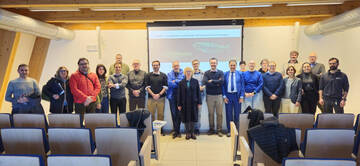
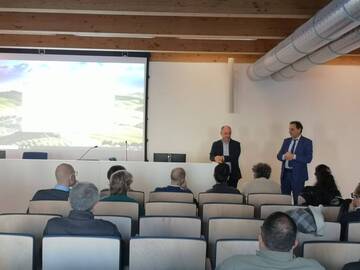
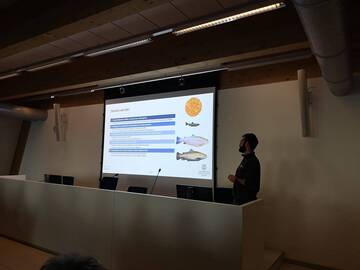
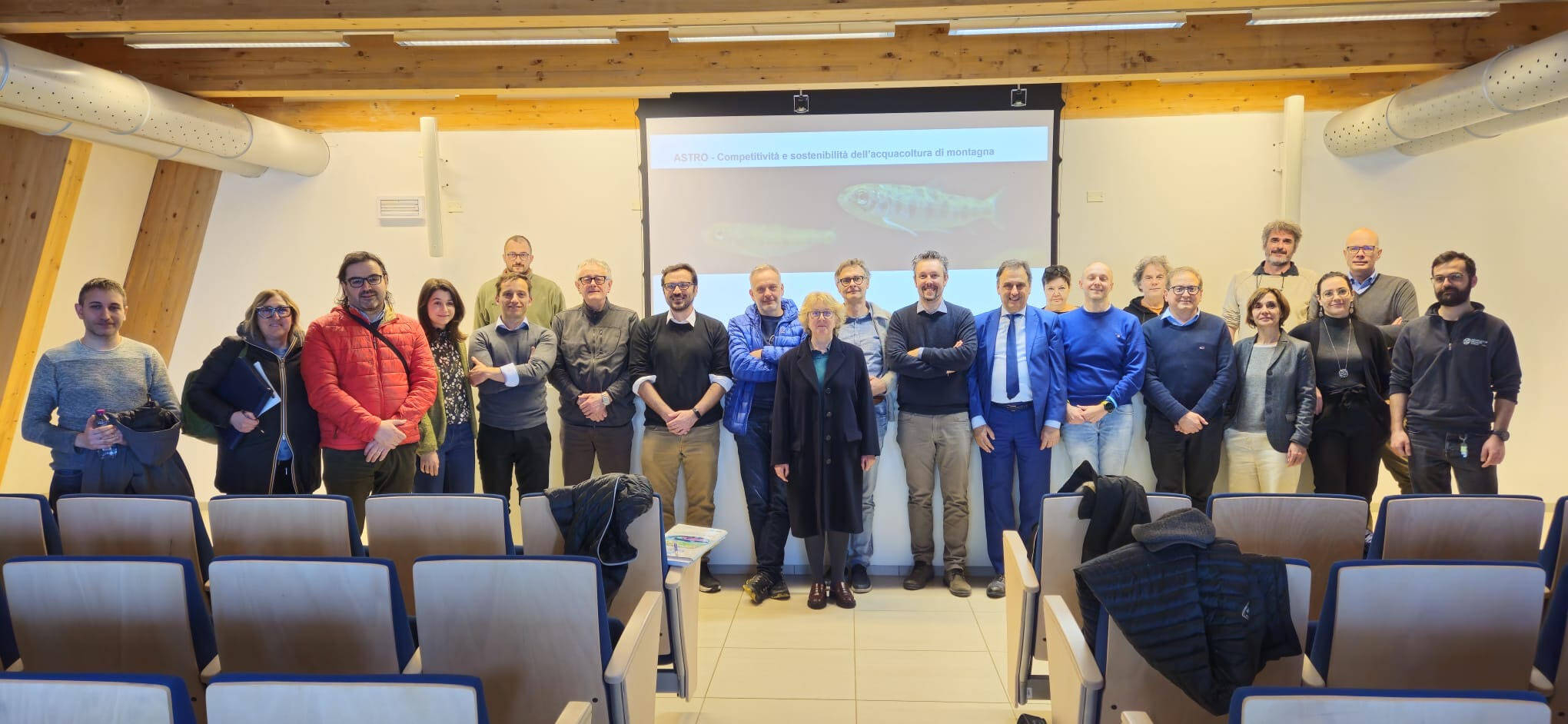
In recent days, researchers, technicians and representatives of the supply chain met at the Conference Hall of the Palazzo della Ricerca e della Conoscenza to discuss the results achieved during the first two years of activity and the actions planned for the final phase of the project.
“The supply chain project,” explained Diego Coller, Director of OP Astro, in his opening remarks, “was launched to support a sector operating in environments of high ecological value and currently facing complex challenges: rising costs, the need to reduce environmental impacts, increasing demand for production efficiency and technological innovation.”
“Within the project,” added Deputy Director General Maurizio Bottura, “the Fondazione Edmund Mach plays a leading scientific role, carrying out activities that directly connect laboratory research, local territories and enterprises.”
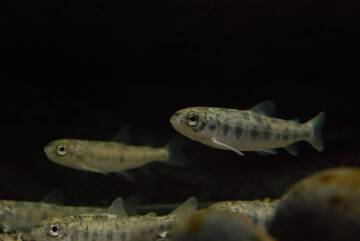
One of the most significant research strands of the project — funded by the Italian Ministry of Agriculture, Food Sovereignty and Forestry — concerns the Garda carpione (Salmo carpio), an endemic fish species at risk of extinction, yet highly valued and of considerable food interest. FEM researchers are investigating the biological and genetic aspects of the species and developing standardized farming protocols, supported by genetic characterization and traceability systems. The objective is to enable controlled production that meets market demand without increasing pressure on wild populations, clearly distinguishing between production and conservation purposes.
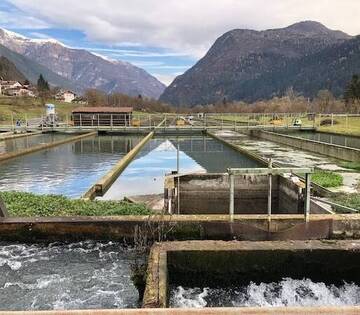
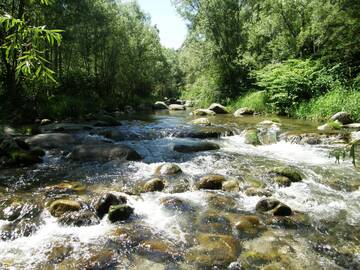
Another key area focuses on water quality. FEM adopts a multidisciplinary approach that integrates traditional methods with innovative techniques based on environmental DNA (eDNA) to analyse biodiversity and the ecological status of water bodies connected to trout farming facilities. These studies make it possible to assess impacts, verify the effectiveness of mitigation measures, and develop tools useful for environmental monitoring and certification systems.
Significant attention is also devoted to precision aquaculture. Through the analysis of historical farm data, predictive models and machine vision techniques applied to images and videos collected in rearing tanks, researchers contribute to the development of tools aimed at improving feeding strategies, animal welfare and production cycle management.
This approach seeks to increase efficiency while reducing waste and environmental impact. Finally, the project addresses the valorisation of organic by-products within the supply chain. Researchers and technicians in San Michele are studying processes to recover valuable components — such as protein meals and oils — and to assess the energy and agronomic potential of residual materials, in line with circular economy principles and the reduction of the overall environmental footprint of aquaculture activities.
The supply chain project foresees investments of approximately €13 million involving 11 beneficiary entities: 65% allocated to productive investments in fish farms in Trentino, 18% to Research & Development, and 17% to processing activities. The largest share of the latter is dedicated to the construction, at ASTRO, of a biorefinery capable of recovering all processing by-products and reintroducing them into the FOOD and FEED supply chains, through products based on trout oil and trout meal for both human consumption and pet food. A “zero-waste” system designed to fully enhance the value of mountain fish production.
https://sites.google.com/fmach.it/filiera-astro/home