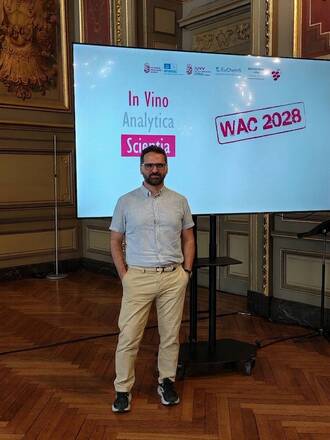
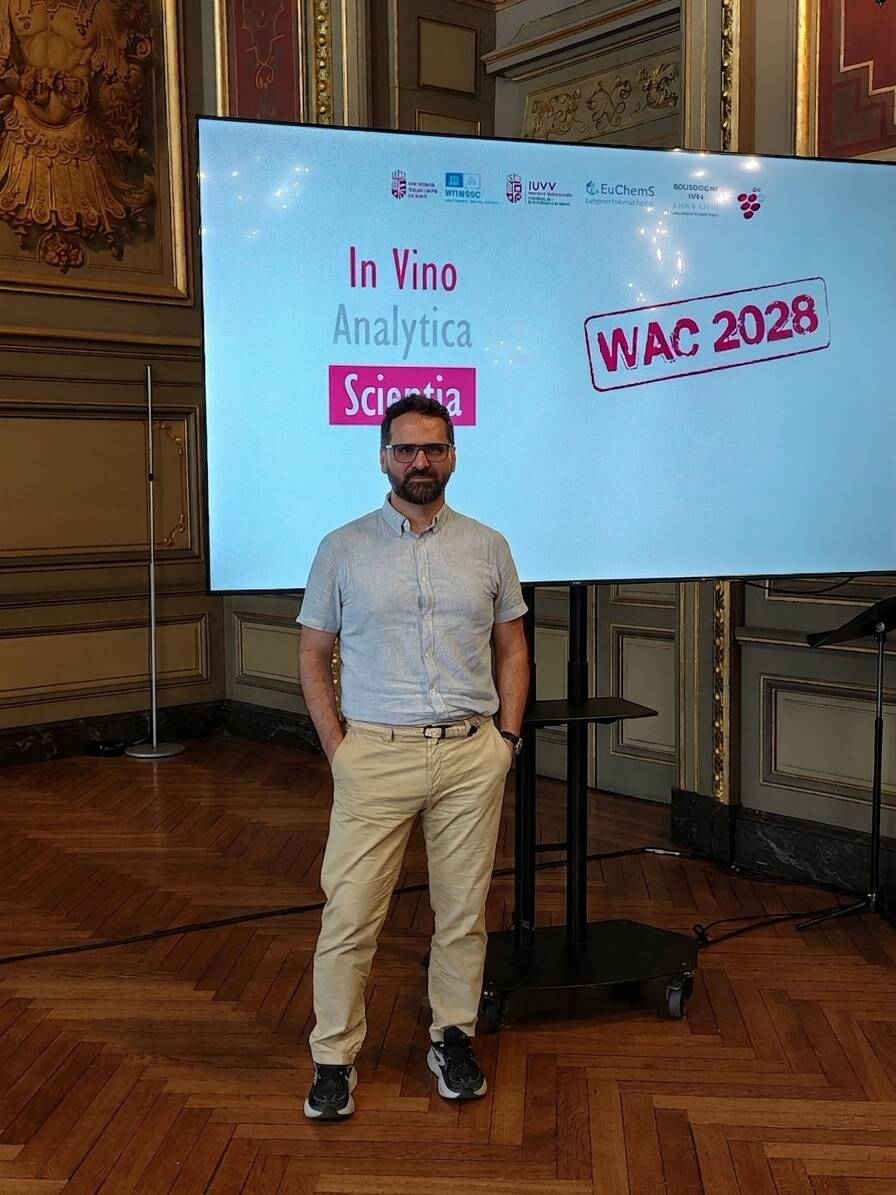
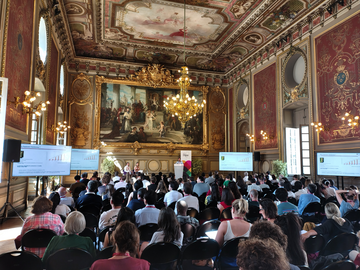
During the 14th edition of In Vino Analytica Scientia (IVAS) , held last week in Dijon, France, Panagiotis Arapitsas, Head of the Metabolomics Research Unit at Fondazione Edmund Mach (FEM), was elected Chair of the Scientific Committee.
Founded in Bordeaux in 1997, IVAS is the leading international symposium dedicated to analytical sciences applied to grapes, wine and spirits. Every two years it brings together scientists from around the world working on wine chemistry, metabolomics, targeted and untargeted analysis, authenticity, quality, bioactive compounds and analytical innovation.
For FEM, this appointment is particularly meaningful. The Foundation has played an active role in the IVAS community for many years and co-organised the 2015 edition in Trentino together with the Laimburg Research Centre, under the leadership of Fulvio Mattivi and Peter Robatscher.
Over the years, the position of Chair of the Scientific Committee has been held by internationally renowned scientists, including Véronique Cheynier, Geoffrey Scollary, Fulvio Mattivi and Elizabeth Waters.
"My election represents both a personal scientific recognition and a recognition of Fondazione Edmund Mach's commitment to wine science at the international level," said Panagiotis Arapitsas. "Serving as Chair of the Scientific Committee means contributing to the scientific direction of a community that has become a global reference point for analytical innovation in the wine sector."
"The election of Panagiotis Arapitsas as Chair of the IVAS Scientific Committee is an important international recognition of the excellence of the research carried out at Fondazione Edmund Mach in wine science," said FEM Director General Riccardo Velasco. "This achievement highlights the work of our entire scientific community and further strengthens FEM's position as an international reference centre for wine research."
The appointment further reinforces Fondazione Edmund Mach's contribution to the advancement of analytical sciences applied to viticulture and oenology and confirms its active role within the international scientific community.