
Follow us
Search

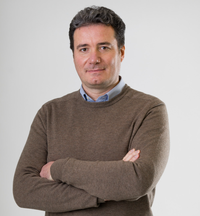
Belelli Marchesini Luca

Luca Belelli Marchesini obtained a Degree in Forest Sciences and a PhD in Forest Ecology at the University of Tuscia in 2002 and 2007, respectively.

His scientific interest has been directed to the biogeochemical cycles of terrestrial ecosystems since the early years of research activity, with particular attention to the quantification of carbon and energy balances and to the understanding of their variability in response to climatic factors, as well as natural and anthropic disturbances, such as fires and land use changes.

Since 1999, he has participated in international EU funded projects carrying out experimental research in Italy, Russia, Spain, Ghana and the Netherlands based on measurements of greenhouse gas fluxes (carbon dioxide and methane), mainly by micrometeorological techniques, in forest, grassland and wetland environments.
He was a postdoc researcher at the Department of Forest Environment and Resources, University of Tuscia, (2007-2011); during these years his professional experiences, in addition to research, included consultancy on the application and development of methodologies for carbon sequestration forest projects (in Ukraine, Montenegro and Argentina) in the framework of the flexibility mechanisms of the UNFCCC.
At the Vrije Universiteit (VU) of Amsterdam (Netherlands) (2011-2015) he carried out research on the impacts of global warming on the stability of the permafrost carbon stocks of the Siberian Arctic tundra.
Between 2016 and 2018 he was Chief Researcher at the Far Eastern Federal University of Vladivostok (Russia), overseeing the launch of a line of research on the monitoring of greenhouse gas fluxes in the Russian sector of Asia-Pacific region, and then Researcher at the Agricultural Technological Institute of the RUDN University of Moscow (Russia).

In recent years, a new growing interest in the application of Internet of Things technology in the field of forest ecology, has led him to contribute to the development of a patented device for measuring the biological processes of woody plants and forest microclimate.

Since 2019, he has been a researcher at the Edmund Mach Foundation's Research and Innovation Center in the field of forest ecophysiology, dealing with forest monitoring using IoT devices and infrastructures for the measurements of greenhouse gas exchanges with the atmosphere.

Luca Belelli Marchesini is author of 40+ papers in international peer-reviewed journals and 5 book chapters (Index H= 23, 1867 Scopus citations), member of the editorial board of the journal Forests and reviewer for the main scientific journals in his professional field.

Image: Belelli Marchesini Luca

Research interest

Forest Ecology
Micrometeorology
Carbon Cycle

Project contact person

PRIN Dig-GHG * EcoTwinGHG - Digital Twins for full carbon accounting of forests and woody crops

Image: banner_pnrr_logoFEMnuovo_blu

(MIUR PRIN) Gli obiettivi principali del progetto sono:

  1. Fornire una metodologia di contabilità completa per misurare il bilancio delle emissioni di carbonio e altri GHG considerando anche l'uso successivo di alcuni prodotti rilevanti per la contabilità C, come il legno.
  2. Sfruttare le nuove tecnologie IoT per monitorare in chiave continua processi ecosistemici che contribuiscono al bilancio netto C e GHG delle foreste e degli ecosistemi di colture legnose che consentono di creare un quadro di modellizzazione contabile sulla base di dati assimilati sul campo.
  3. Testare i prototipi contabili delle nuove soluzioni tecnologiche per la modellazione dei dati su 2 siti forestali e 2 frutteti.
  4. Fornire uno strumento operativo per il bilancio netto C e GHG nella silvicoltura e settore agroforestale per la scienza e le imprese.

Attività FEM: 
Fem sarà coinvolta negli obiettivi 2 e 3 con un sito in foresta

Further details

RemoTrees - A new technology of in-situ observation datasets to address climate change effects in hard-to-reach forest areas

(HEU Horizon Europe) Forests play a key role in the Earth climate system as they cover about 30% of the land area. In the last decade they absorbed more than 7 Gt of CO2 contributing to reduce global warming and to buffer and mitigate increasing climate variability. The summers of 2018 and 2019 included some of the hottest and driest periods ever recorded globally, however the extent and severity of their impact is unknown due to lack of a comprehensive monitoring network, which generally does not include hard-to-reach areas characterised by strong logistic limitations.
Therefore, novel technological solutions are urgently needed to monitor forest responses to climate change and related extreme events also in remote areas. Recent advances in Internet Of Things technology (IoT), satellite IoT connectivity and energy harvesting systems are opening unprecedented opportunities for the use of IoT devices in standalone experimental setups.
In this context, the aim of the RemoTrees project is to design and build an innovative, autonomous in-situ monitoring system designed for remote forest areas and providing data via satellite communication to a dedicated RemoTrees platform. In this framework, RemoTrees will integrate existing and novel Earth Observation (EO) data with in-situ observations of Essential Climate Variables (ECVs: fraction of absorbed photosynthetically active radiation, leaf area index, soil moisture, biomass change) and other key variables including e.g. stem growth, stem moisture, sap flow, canopy transmittance, besides air humidity and temperature. RemoTrees will include study cases on interoperability with GEOSS (Global Earth Observation System of Systems), and on how in-situ data can support an improved understanding of the climate variability impact on forests. The reinforced in-situ component will be beneficial for Copernicus products validation and will enhance the assessment of climate change long-term mitigation and adaptation potential of forests, towards novel insights for climate-smart forest management.

Further details