
Cos'è
The "In the Spotlight" series features double sessions of two 20-minute presentations, each followed by a 10-minute open dialogue and Q&A. Designed to introduce new colleagues to the broader FEM research community, these sessions offer a platform for team members to share their scientific backgrounds, present active projects, and showcase specialized technical skills. For this "In the Spotlight" session, we are pleased to introduce Dr. Nadia Vendrame and Dr. Rafael Dreux M. Fernandes. Anyone interested is warmly invited to attend.
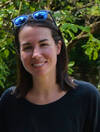
Nadia Vendrame is a researcher in the Digital Agriculture Unit at Fondazione Edmund Mach. Here she focuses her work on plant ecophysiology to understand the response of agricultural crops to environmental drivers and their performance under abiotic stress conditions. She has a background in environmental science and she earned a PhD in Crop Science at the DAFNAE department of the University of Padova, where she also spent a few years as postdoc. During this period, she developed her interest in micrometeorology and the study of interactions between plants and the atmosphere, focusing her research on the assessment of carbon and water budgets of vineyards applying the eddy covariance method. Then, she joined the scientific staff of the Ecosystem Thematic Centre of the European Research Infrastructure ICOS. Afterwards, she was hired as junior assistant professor (RTDa) at the C3A of the University of Trento, where she held the course of Agrometeorology within the bachelor on Viticulture and Enology, and conducted research on surface-atmosphere interactions in complex terrain at the Atmospheric Physics group of the University of Trento.
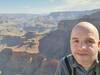
Dr. Rafael Dreux M. Fernandes is a Researcher (Level 4) at the Fondazione Edmund Mach (Trento, Italy), where he focuses on studies regarding plant physiology, crop water relations, and precision irrigation technologies.
He previously worked as a Postdoctoral Fellow at the University of Bologna, having the project KIWIQUALI funded by the prestigious Marie Skłodowska-Curie Actions (MSCA). This research project focused on optimizing irrigation management in Actinidia (kiwifruit) by estimating stomatal conductance from sap flow measurements and meteorological variables, resulting in multiple peer-reviewed publications and international conference presentations.
Previously, Dr. Rafael Fernandes worked at the Universidade Federal do Recôncavo da Bahia (Brazil) as a Postdoctoral Fellow, where he led a small team of researchers in utilizing the DSSAT crop modeling framework to simulate soybean yields and water requirements under future climate scenarios.
Dr. Rafael Fernandes obtained his Ph.D. in Spain, which focused on the water relations and physiological performance of olive trees under regulated deficit irrigation (RDI). He applied several plant based sensors to do so, including trunk and fruit dendrometers, sap flow sensors, and Leaf Patch Clamp Pressure (LPCP) probes. During this period, Dr. Rafael Fernandes pioneered the application of machine learning algorithms to LPCP sensor data, resulting in a high-impact scientific publication. He also designed original experimental frameworks evaluating fruit-leaf water dynamics in olive orchards under regulated deficit irrigation (RDI).